



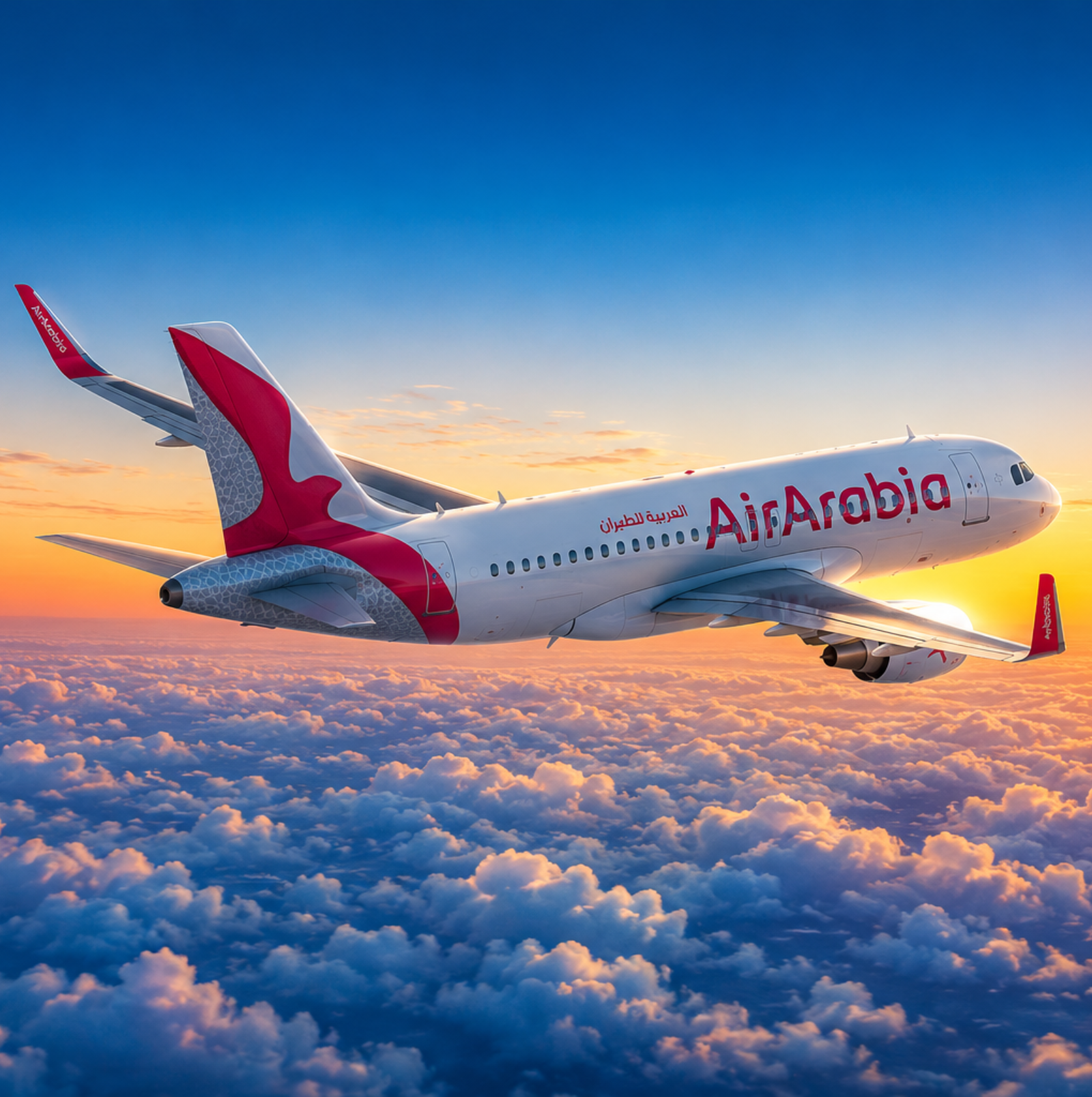
Air Arabia reported a decline in first-quarter profit for 2026 as regional airspace closures and operational disruptions affected airline operations across the Middle East.
The Sharjah-based airline announced that net profit fell by 22% to Dh278 million during the January to March period, compared to Dh355 million recorded in the same quarter last year.
The decline comes after regional tensions and conflict involving the United States, Israel, and Iran led to temporary airspace closures across several Gulf countries earlier this year. The situation disrupted flights and created challenges for airlines and the broader travel industry.
Despite these difficulties, Air Arabia’s overall revenue increased slightly by 1% year-on-year, reaching Dh1.8 billion during the quarter.
The airline carried approximately 4.7 million passengers across its network during the period. However, passenger numbers were 5% lower compared to the same period last year due to flight disruptions and changing travel conditions.
At the same time, the company reported an improvement in seat occupancy levels. The average seat load factor rose to 86%, indicating that a higher percentage of available seats were filled on operating flights.
Abdullah bin Mohammad Al Thani said the airline faced a challenging operating environment during the quarter but managed to respond quickly to changing conditions.
According to the chairman, the company focused on optimizing flight capacity and maintaining operational continuity wherever possible. He added that strong passenger demand in active markets helped support the airline’s overall performance.
Air Arabia currently operates a fleet of 90 Airbus A320 and A321 aircraft across multiple hubs located in the UAE, Morocco, Egypt, and Pakistan.
The company also warned that uncertainty in the region continues to affect airline operations globally, contributing to fuel price volatility, inflationary pressures, and disruptions in supply chains and logistics.
Despite these ongoing challenges, Air Arabia said it remains confident about long-term demand in the regional aviation market and plans to continue operating with a focus on efficiency, cost management, and customer service.
Industry analysts say airlines across the Middle East continue to face pressure from geopolitical uncertainty, but strong regional travel demand and economic activity are helping the sector remain resilient.
Source: International aviation and business reports