



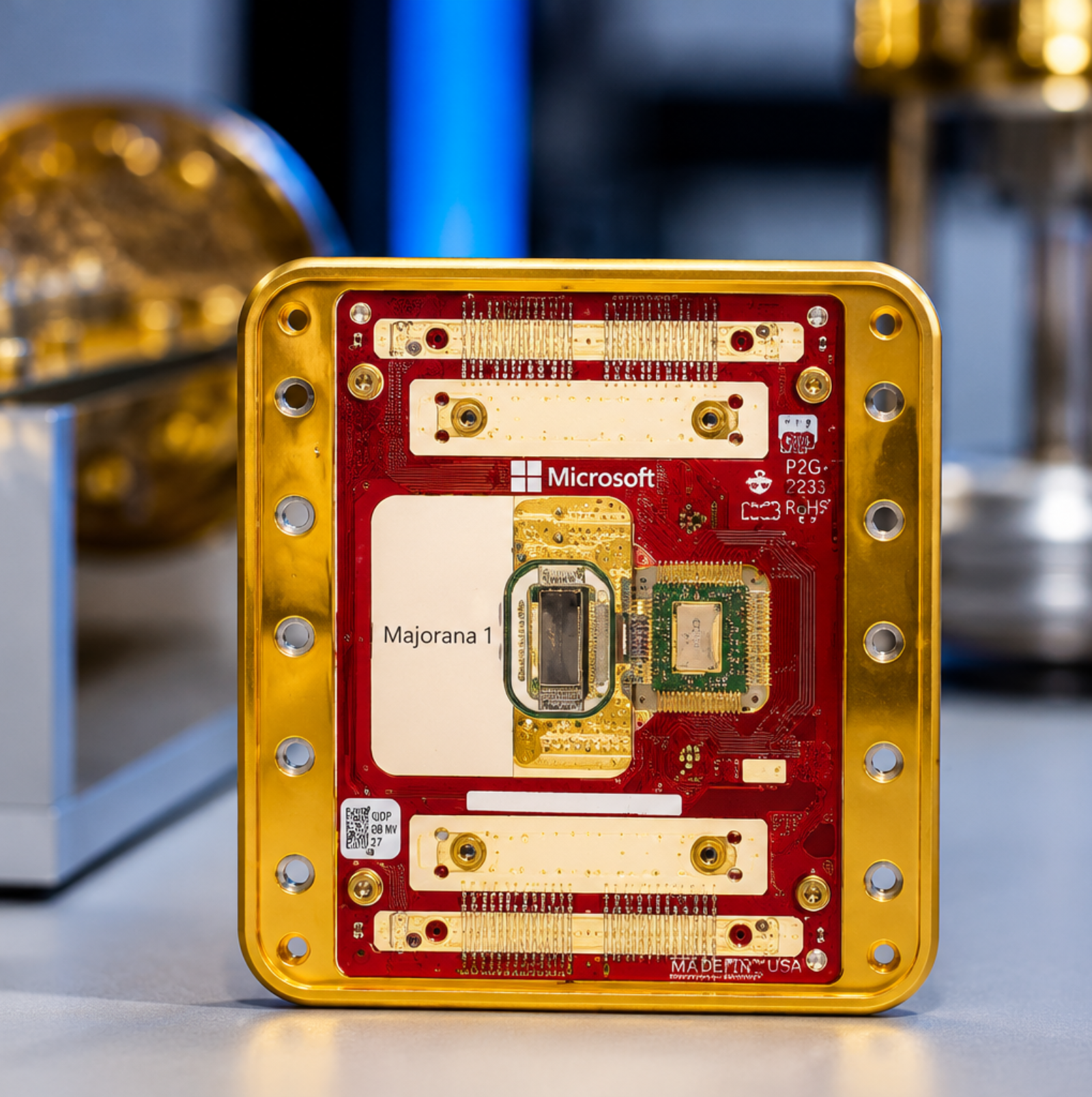
Microsoft has introduced an upgraded version of its experimental quantum computing chip, claiming significant improvements in reliability and error resistance. However, some scientists remain unconvinced that the company has fully achieved the breakthrough it is aiming for.
Quantum computers have the potential to solve complex problems far beyond the capabilities of traditional computers, but one of the industry’s biggest challenges remains reducing errors that can disrupt calculations.
Microsoft’s latest development focuses on a special type of quantum computing architecture known as a topological qubit. The company believes this approach could create more stable quantum systems that are less vulnerable to errors than conventional quantum technologies.
The upgraded chip, revealed during Microsoft’s Build conference, uses different materials than previous versions. Researchers replaced aluminum with lead in key components of the device, resulting in a major improvement in a performance measurement known as “parity lifetime.”
According to Microsoft researchers, the new chip increased this measurement from milliseconds to approximately 20 seconds, representing more than a thousand-fold improvement in a key stability metric.
Chetan Nayak said the improvement demonstrates significant progress toward building practical and reliable quantum computing systems.
The company’s quantum approach relies on theoretical particles known as Majoranas, which could potentially store quantum information in a way that naturally protects it from certain types of errors.
Microsoft argues that these particles allow information to be stored across multiple locations simultaneously, making quantum calculations more stable and reliable.
However, not all experts are convinced by the latest announcement.
Some researchers believe Microsoft has made meaningful progress in demonstrating the underlying physics needed for topological quantum computing. Supporters say the company’s new data provides stronger evidence for the existence of the quantum states required to build future topological qubits.
Others remain skeptical.
Henry Legg said the new research does not fully address previous concerns about whether Microsoft has successfully demonstrated a functioning topological qubit.
Critics argue that key experimental evidence is still missing and that further independent verification will be required before the scientific community fully accepts the company’s claims.
The debate reflects the broader challenges facing the quantum computing industry, where breakthroughs often involve highly complex physics and can take years to validate through peer review and replication.
Despite the controversy, industry experts agree that quantum computing remains one of the most important long-term technology fields, attracting billions of dollars in investment from governments and major technology companies worldwide.
Microsoft continues to compete with companies such as Google, IBM, and several specialized quantum computing startups in the race to develop practical quantum systems.
For now, Microsoft’s latest announcement highlights both the progress being made and the scientific challenges that still remain before quantum computers become widely useful.
Source: International technology and quantum computing reports